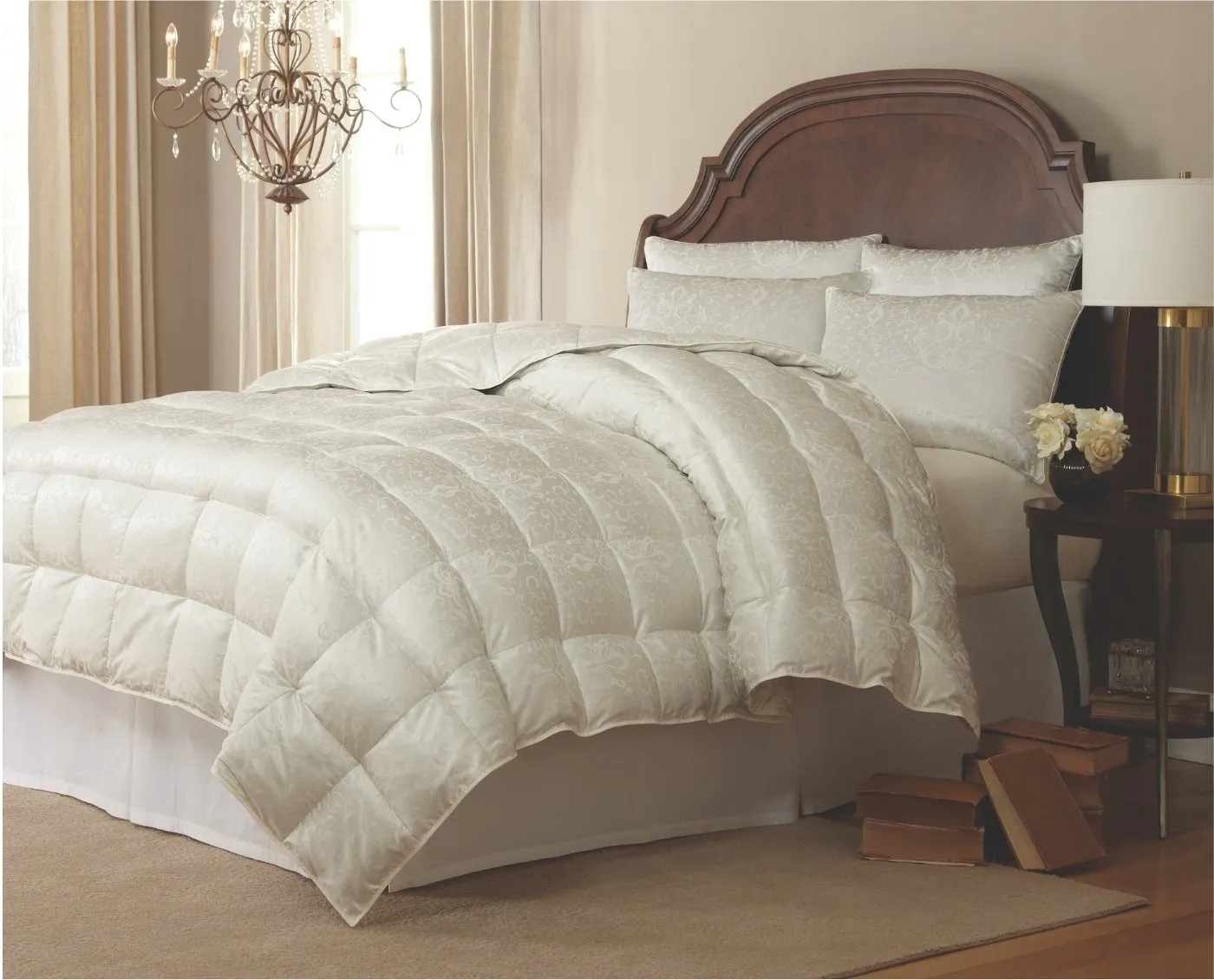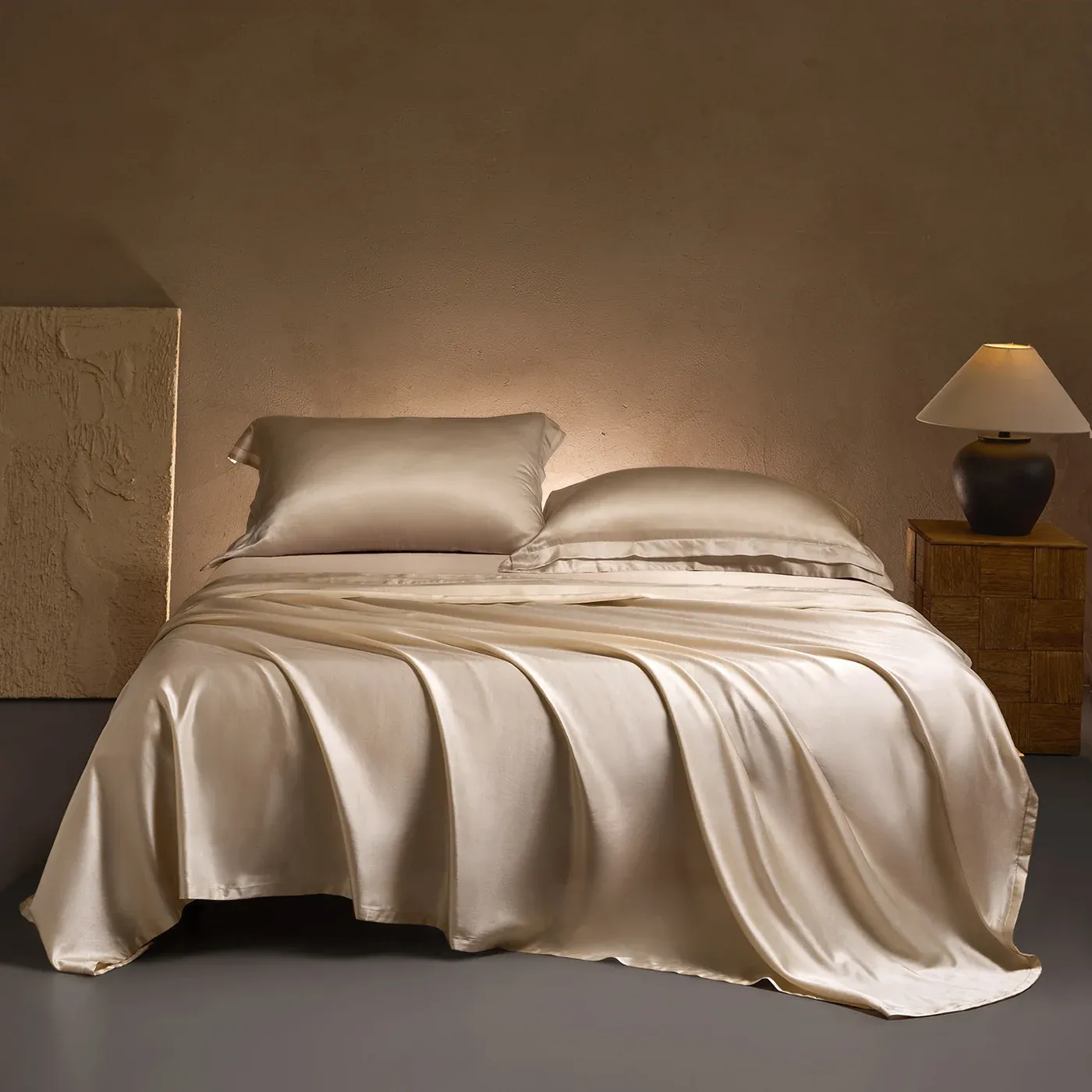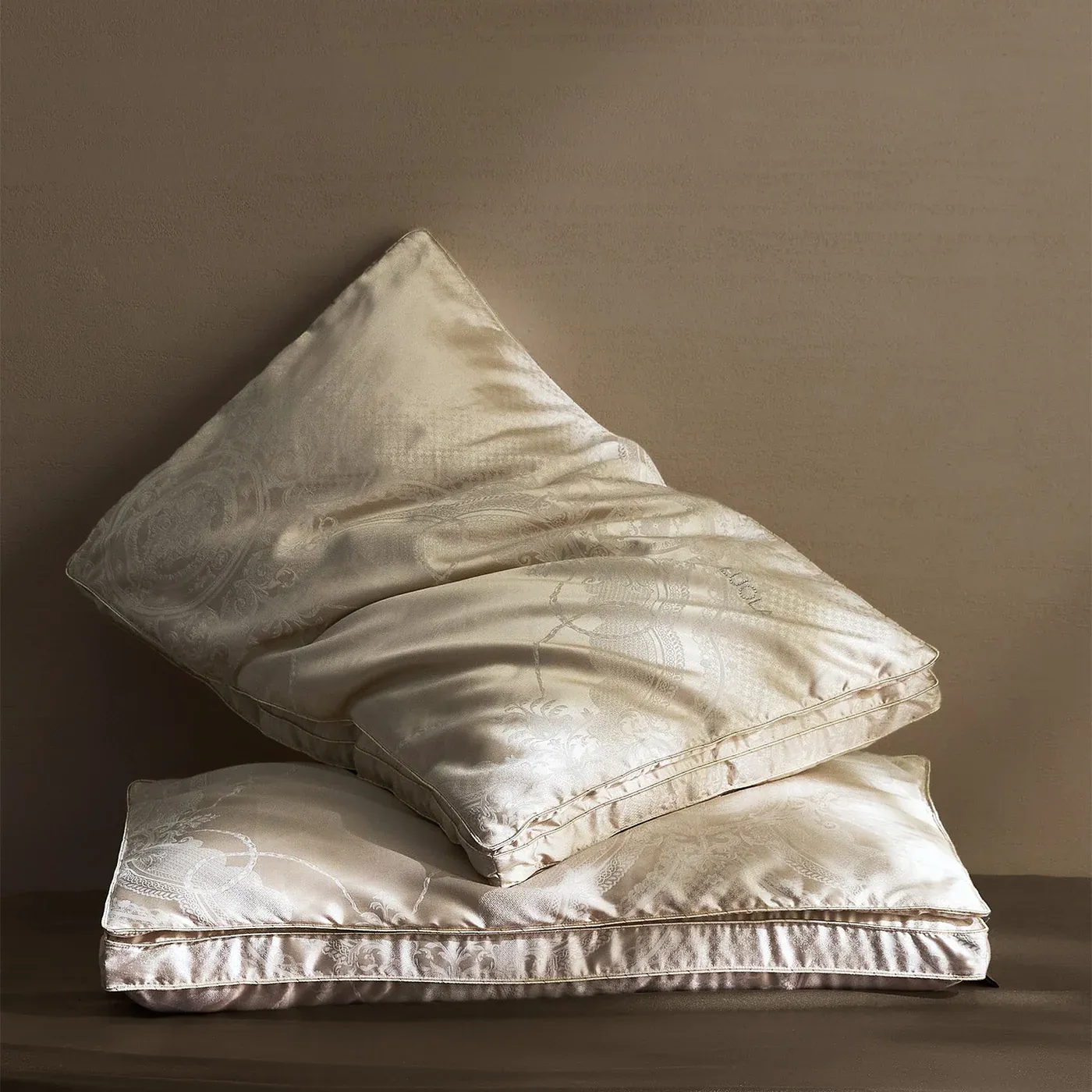

We spend a lot of time thinking about mattresses and pillows, yet the part of the bed closest to the body is much simpler.
The sheet beneath you. The fabric covering you. The pillowcase against your face.
For several hours every night, our skin is in contact with these materials. We notice when a sheet is rough, when the bed holds too much heat or when we wake wanting to push the covers aside.
A well-made bed can be cool when you first get in, comfortable as the night goes on and soft enough that nothing competes with sleep.
“The comfort of a bed begins with what touches you.”
What Happens Through the Night
Our body temperature changes during sleep. The temperature of the bedroom matters, but so does what we sleep under and against.
Breathable fabrics allow heat and moisture to move rather than holding everything close to the skin. On warmer nights, this can make the difference between settling comfortably and repeatedly pushing the covers away.
In colder weather, sheets, blankets and a duvet work together to keep warmth around the body without making the bed stuffy.
Then there is texture.
We turn, stretch and change position throughout the night. Sheets move with us. A pillowcase rests against the face for hours.
Some people prefer the clean crispness of freshly washed cotton. Others want something softer and smoother.
Quality Is More Than Thread Count
Thread count has spent years being treated as the number that tells us whether a sheet is good.
It doesn't tell the whole story.
The quality of the fibre matters. So does the yarn, the weave and the way the fabric has been finished.
Cotton percale is usually crisp and cool against the skin. Sateen has a smoother surface with a little more softness. Linen is breathable, relaxed and changes beautifully with use. Silk has a smooth surface and natural drape, while silk-cotton blends combine some of that softness with the character of cotton.
Even two sheets made from the same type of fibre can be very different once the quality of the fibre, construction and finishing are considered.
A large number printed on the packaging cannot tell you all of that.
The Bed Has to Suit the Person Sleeping in It
There isn't one perfect sheet for everybody.
Someone who sleeps warm may care most about breathability and a cooler surface. Another person may prefer softness and warmth. Climate matters too.
The best bedding works with the way you actually sleep.
A bedroom cannot guarantee good sleep. Neither can a beautiful set of sheets. But we can make the bed itself comfortable.
Clean sheets. Good fabric. A pillow you like. Bedding suited to the temperature of the room and to your own body.
We wash the sheets, make the bed and go about the rest of the day. Hours later, we come back.
When something is going to spend that much time against our skin, choosing it carefully is hardly an extravagance.
It is worth getting right.